
Table of Contents
ToggleThe Myth of "Retail Therapy": Why Buying Things Never Fills the Void
I remember staring at my bank statement, a sharp knot forming in my stomach. Just last week, I had sworn I was saving for a new investment, yet here was a massive charge for a new coffee machine, a machine I absolutely didn’t need and definitely couldn’t afford. My only defense? “I had a stressful day at work; I deserved a little treat.” I had spent a significant chunk of my hard-earned savings on what felt like a necessary emotional purchase, only to be hit with an overwhelming wave of regret or what I call retail therapy guilt.
This specific experience is the universal language of emotional spending: the act of spending money to manage or alter a mood, be it stress, sadness or sheer boredom rather than to meet a genuine, practical need.
While the phrase “retail therapy” sounds harmless even fun it masks a serious financial vulnerability. The core problem is that the temporary dopamine rush we get from the purchase is immediately followed by crushing financial guilt and, often, a return of the original negative feeling. Emotional spending doesn’t just derail a budget; it undermines the entire psychological foundation of wealth building.
In this comprehensive guide, we will uncover why you do it, what your personal and cultural emotional spending triggers are (from Wall Street to Worli) and most importantly, provide a non-negotiable roadmap on how to stop emotional spending and break the cycle for good.
The Psychological Trap: Why Shopping Feels So Good (Temporarily)
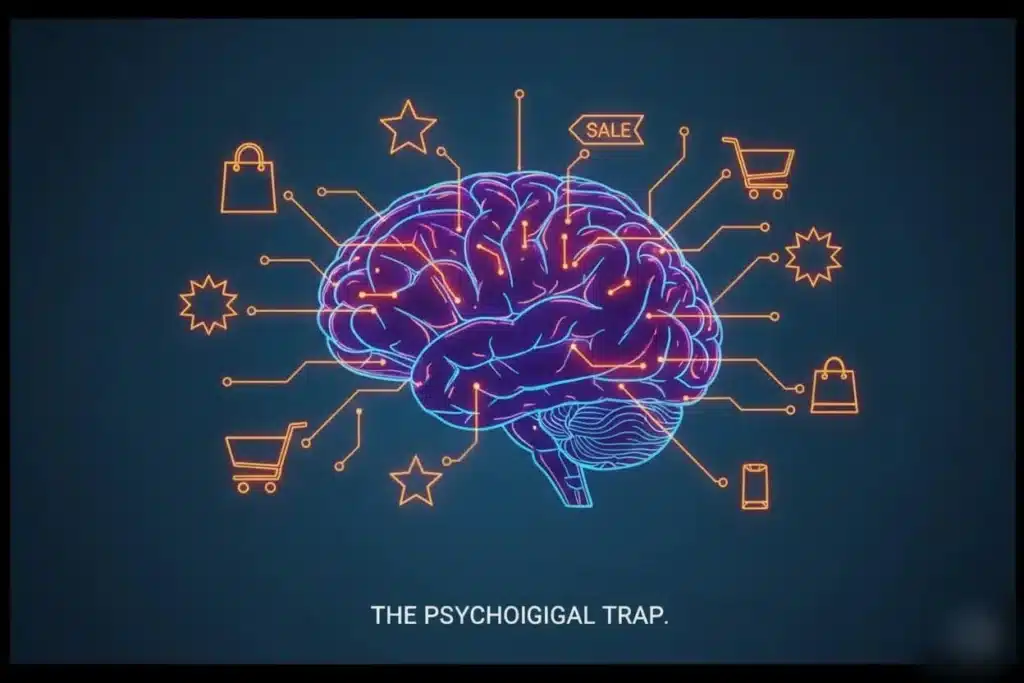
To truly master emotional spending, we must first understand the neuroscience behind why that new purchase feels so irresistible in the moment. It’s not a lack of willpower; it’s a deeply ingrained biological reward system.
The Dopamine Hit and the Brain’s Reward System
The process begins the moment you anticipate a purchase. When we click “Add to Cart” or “Buy,” our brain is immediately flooded with dopamine, a powerful neurotransmitter that signals pleasure and satisfaction. This rush is the chemical basis for instant gratification. Studies in behavioral economics show that the brain gets a far greater dopamine hit from the anticipation of the reward than from the item itself.
This creates a highly addictive reward loop. Your brain quickly learns that when you feel stress, boredom, or loneliness, the fastest route to comfort and relief is through spending. This response is similar to the mechanism seen in minor addictions. The emotional spending cycle thus becomes self-perpetuating: a negative emotion leads to spending, spending leads to a temporary mood lift, and the inevitable financial anxiety and shopping guilt reinforce the original negative emotion, leading the person to seek another quick purchase. To learn more about the science of dopamine and consumer behavior, consult: Link to A Neurological Study of Compulsive Buying Behaviour – ResearchGate.
Distinguishing a "Want" from an "Emotional Need"
The purchase itself is almost always a symptom, not the underlying cause. When you buy a third luxury gadget, you aren’t actually solving a technology problem; you are attempting to solve a deeper emotional need for comfort, control, or self-esteem.
The Symptom: Buying $500 worth of unnecessary stock.
The Actual Need: Feeling overwhelmed by career stress and needing a temporary illusion of control over my financial situation.
The unfortunate Financial Impact is that this discretionary spending, driven by emotion, derails budgets and investment goals faster than any planned expense. This category of spending is often erratic and involves high-ticket items, rapidly consuming the savings that were earmarked for growth or debt reduction.
Spotting Your Triggers: The Three Faces of Emotional Spending
The first step in breaking the cycle is ruthless self-identification. To find out how to stop emotional spending, you must first figure out exactly when and why your urges surface. The triggers fall into three main categories: internal (negative/positive) and external (social/cultural).
The Internal Triggers (Stress, Boredom, Sadness)
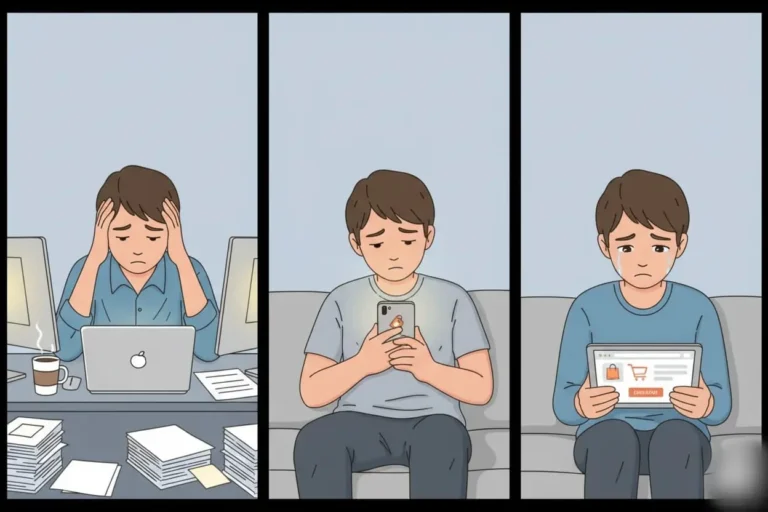
These are the most common internal drivers where we spend to avoid an uncomfortable feeling.
-
Stress & Fatigue: A stressful day at the office or a long commute in Mumbai traffic often leads to ordering expensive international delivery/takeout. This food splurge is a classic form of emotional compensation.
-
Boredom: This is the silent killer. It leads to mindless scrolling on Amazon or Flipkart, which quickly turns into “adding to cart” just to feel a fleeting sense of purpose or engagement.
-
Sadness/Loneliness: A personal setback or failure can trigger a major purchase as a form of self-soothing, an attempt to instantly reclaim lost happiness or self-worth.
Action Step: The most effective initial tool is the Spending Journal. Every time you feel the urge to buy something non-essential, you must pause and record three things: 1. The Item, 2. The Cost, and 3. The Emotion you felt immediately before the urge. This practice creates awareness, which is the crucial first step in disarming your emotional spending triggers.
The External Triggers (Social & Cultural Pressure)
External pressure leverages our innate human need for belonging and status, making these emotional spending triggers extremely powerful across all cultures.
The India-Specific Trigger: “Keeping Up With the Sharmas”: This is a profound cultural reality in India. The pressure is on social comparison and status spending. This often manifests in costly, non-essential spending on lavish wedding ceremonies, expensive gifts, or designer goods used specifically to project financial success and social standing to the community. This emotional spending is deeply tied to familial obligation.
The Tier 1 Trigger: Digital Frictionlessness: In developed markets (US, UK, Europe), emotional spending is often fueled by technology. The ease of online shopping, one-click checkouts, and fast digital payments eliminates the pain of paying. This lack of financial friction makes it dangerously easy for impulsive urges to become immediate purchases. For data on recent US household debt, including credit card and auto loan balances which rise due to easy credit, consult the Federal Reserve Bank of New York’s latest Household Debt and Credit Report: Link to Household Debt and Credit Report – FEDERAL RESERVE BANK of NEW YORK.
The Universal FOMO Trap: The fear of missing out (FOMO) is globally amplified by social media, leading to spending on trends and experiences purely to validate one’s lifestyle to an external audience.
Breaking the Cycle: 5 Non-Negotiable Rules to Stop Impulsive Spending
Now that we know why we spend, we need a tactical action plan. The key to how to stop emotional spending is creating layers of psychological and physical barriers between the impulse and the purchase.
The 48-Hour Pause (Your Rational Reset Button)
This is the most powerful technique. For any non-essential item over a certain threshold (I personally use a threshold of 50/₹3,000), force yourself to wait two full days (48 hours) before purchasing it.
The rationale is simple: the immediate emotional urge that spiked your dopamine levels is temporary. The emotional high will usually pass within 48 hours, allowing your rational mind the one that cares about your retirement and goals to take over. Most often, after the pause, you’ll realize you didn’t even remember why you wanted the item in the first place.
Create Financial Friction
The easier it is to spend, the more likely you are to do it. You must create deliberate obstacles for your impulsive self.
Tier 1 & Global Tip: Delete saved credit card information from all online stores. The necessity of physically retrieving your wallet and typing in the 16-digit number is often enough “friction” to stop the impulse.
India/Emerging Market Tip: Embrace the “pain of paying” by using cash for all discretionary/entertainment purchases. The ease and speed of UPI and digital payments (which transfer money instantly without a physical exchange) eliminate the psychological pain. Using cash forces a tangible acknowledgment of the loss. For official data on UPI transaction volumes and its impact on saving behavior, refer to the NPCI: Link to NPCI website.
Budget for Fun (The Guilt-Free Spending Envelope)
Completely restricting yourself is a recipe for a massive emotional spending “binge.” Instead, budget for controlled fun.
The Guilt-Free Allowance: Allocate a small, set amount of “guilt-free” spending money each month (e.g., $100 / ₹5,000) that is specifically designated for fun, hobbies, or impulsive treats. This gives your brain the controlled “reward outlet” it craves without destroying the rest of your budget. This practice reinforces that your financial success habits are sustainable, not punitive. For budgeting principles that include fun spending, consult: Link to a reputable financial planning resource on guilt-free spending.
Replace Shopping with a Non-Monetary Coping Mechanism
When you feel an emotional spending trigger (stress, boredom, sadness), you must immediately perform a replacement activity that addresses the emotional need without costing money.
If the trigger is Stress, replace shopping with a 10-minute walk or meditation.
If the trigger is Loneliness, replace shopping with calling a friend or journaling the emotion.
This is crucial for overcoming financial anxiety and shopping, as you are breaking the conditioned response that connects distress with spending.
Practice the "Cost Per Use" Test
Emotional spending focuses on the immediate emotional boost of the purchase. Rational spending focuses on the long-term value of the item.
-
The Test: Instead of focusing on the price, ask: “How many times will I use this item before it breaks?” and divide the price by that number. This helps reframe a purchase from an emotional “boost” to a rational “asset,” giving you a clear way to bypass the emotional impulse and combat retail therapy guilt. I personally use this test constantly when considering expensive gadgets or clothing.
Conclusion:
If you struggle with financial anxiety and shopping, remember that the temporary satisfaction of a new item is a poor investment in your long-term happiness. True well-being comes from security, meaningful experiences, strong connection and the profound satisfaction of making progress toward your most important financial and life goals.
The knot in my stomach the day I realized I bought that coffee machine out of stress was the wake-up call I needed. Your personal emotional spending triggers are your brain’s call for comfort. Answer that call with self-care, connection, and progress, not self-sabotage. Use the pause techniques and start journaling your triggers today to take back control of your money and, more importantly, your mood.
Frequently Asked Questions (FAQs)
Q1: What is the biggest danger of constant 'Retail Therapy'?
The biggest danger is that it actively exacerbates financial anxiety and shopping. Every time you emotionally spend, you increase your anxiety about your financial future, which then creates a new trigger for more emotional spending, trapping you in a self-destructive loop of debt and anxiety.
Q2: Is paying by UPI/Card worse for emotional spending than cash?
Yes. Paying by digital methods (like UPI, Card, or mobile wallets) increases emotional spending triggers because it creates zero financial friction. Using cash forces a physical, tangible acknowledgment of the loss, which engages the part of the brain that registers “pain of paying,” often making you think twice about the purchase.
Q3: How can I handle cultural pressure like "Keeping Up With the Sharmas"?
This requires a polite verbal defense. Frame your financial decisions as a positive, long-term goal. You can say: “That is a wonderful idea, but we are currently prioritizing our investment in our child’s college fund this year. We’ve set a strict budget for discretionary social events.” This frames your restraint as a responsible, future-focused decision, which is difficult for others to argue against.
Q4: How quickly can I stop emotional spending?
The first step is always awareness. Once you start your Spending Journal, you will likely spot your main emotional spending triggers within the first two weeks. The habit of pausing (the 48-Hour Pause) can be implemented immediately and often stops 80% of impulsive purchases in the first month. Consistency is key to lasting change.
Q5: What is a "Spending Journal Template"?
A Spending Journal Template is a simple log where you record the item, the cost, and most importantly, the emotion you were feeling right before you made the purchase. This tool transforms your spending from an unconscious act into conscious data, making your personal emotional spending triggers visible.
Disclaimer
The information presented in this blog post regarding emotional spending, financial anxiety, and budgeting is intended for educational and informational purposes only. While the article discusses psychological principles and suggests coping mechanisms, it is not a substitute for professional mental health care, counseling, or financial advice. The author and publisher are not licensed mental health professionals or financial advisors. If you are struggling with severe debt, compulsive shopping behavior, or significant mental health challenges, please seek help from a qualified therapist, licensed financial advisor, or debt counselor. The author and publisher are not liable for any financial or psychological distress resulting from the use of this information.